

Degenerative Disc Disease

Degenerative Disc Disease (DDD)

Degenerative Disc Disease (DDD) describes wear-related changes in spinal discs that can cause persistent neck or back pain, stiffness, and nerve irritation. Our Southeast Michigan spine team builds personalized plans that combine physical therapy, injections, and advanced surgical options when conservative care is not enough.
Scott McCarty, MD
Medically Reviewed by Scott McCarty, MD on July 6, 2026
Degenerative Disc Disease

Understanding Degenerative Disc Disease

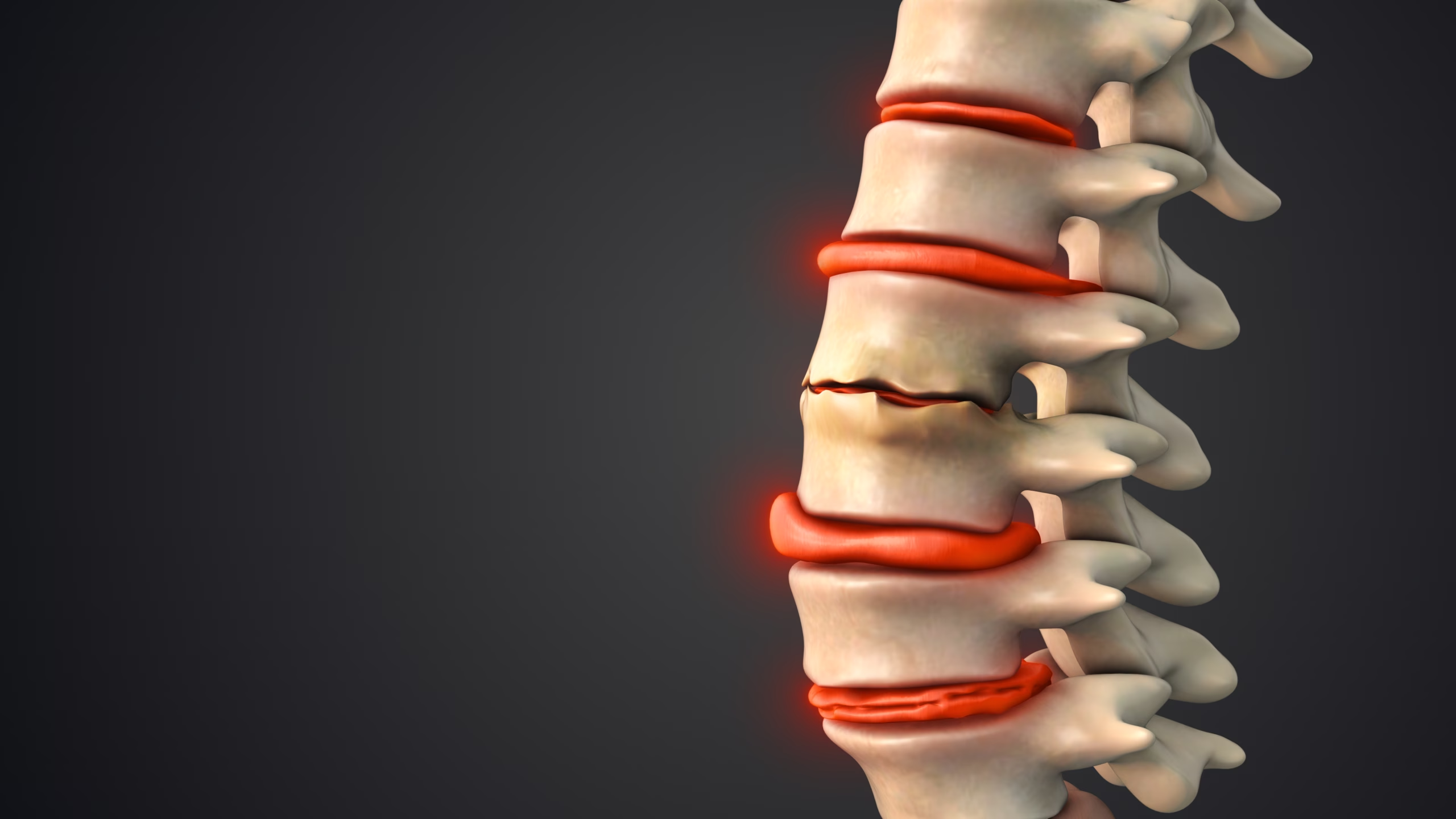
Degenerative disc disease (DDD) is a common condition in which spinal discs lose hydration and cushioning over time. It can affect the neck or lower back and may cause localized pain, muscle spasms, or nerve-related symptoms in the arms or legs.

While disc changes are a normal part of aging, not everyone experiences pain. When symptoms interfere with work, sleep, or activity, targeted treatment can restore function. At Synergy Health Partners, we focus on accurate diagnosis, staged treatment, and long-term spine health.

Common Symptoms

  • Chronic neck or lower back pain that fluctuates in intensity
  • Stiffness after sitting or upon waking
  • Pain that improves with movement but worsens with prolonged positions
  • Radiating arm or leg pain when a disc irritates nearby nerves
  • Reduced flexibility in the spine over time

Causes & Risk Factors

DDD develops as discs naturally lose water content and elasticity. Contributing factors include aging, genetics, repetitive spinal stress, smoking, obesity, and previous spine injuries.

Because disc degeneration can coexist with arthritis, stenosis, or herniation, an accurate diagnosis is essential to choosing the right treatment pathway.

Diagnosis

Diagnosis combines physical examination with MRI, X-ray, or CT imaging to assess disc height, alignment, and nerve involvement. Our specialists also evaluate posture, core strength, and activity limitations to build a complete picture.

Synergy’s integrated model allows imaging review and specialist consultation to happen in a coordinated timeline—not across disconnected offices. CLICK HERE to see our MRI Locations.

When to See a Doctor

See a spine specialist if neck or back pain lasts more than six weeks, limits daily activities, or is accompanied by arm or leg numbness. Urgent evaluation is needed for progressive weakness, unexplained weight loss with spine pain, or bowel/bladder changes.

Why Synergy Health for Degenerative Disc Disease?

We match treatment intensity to your symptoms—starting with conservative care and advancing only when necessary.
  • Multidisciplinary spine team under one coordinated network
  • Advanced diagnostics with same-week access in many locations
  • Injection therapy, physical therapy, and surgical options
  • Focus on mobility, function, and long-term spine health

Treatment Options

Star icon

From structured physical therapy and injection therapy to motion-preserving and fusion procedures, our spine surgeons tailor treatment to your activity goals.

PROVEN RESULTS FOR SPINE CARE

Why Choose Synergy?

Patients benefit from a conservative-first pathway with direct access to fellowship-trained surgeons when symptoms persist.
0 %

of patients report significant pain improvement

(6 months)

0 %

would recommend their Synergy spine specialist

(1 year)

0 %

avoid surgery with coordinated conservative care

(12 weeks)

Data Source: CODE Technology PRO Surveys (2025).