

Spinal Stenosis

Spinal Stenosis

Spinal stenosis narrows the canal in your neck or lower back and can put pressure on nearby nerves. If pain, numbness, weakness, balance changes or difficulty walking are limiting your life, Synergy Health Partners can help you understand the cause, compare non-surgical care spinal stenosis treatment with surgery, and choose the right next step.

Ask about same-week spine appointments in Southeast Michigan.
Scott McCarty, MD
Medically Reviewed by Scott McCarty, MD on July 6, 2026

Talk to Our Team

Get a clear diagnosis and a plan built around your symptoms, imaging and goals.
(855) 750-5757
Spinal Stenosis

Understanding Spinal Stenosis

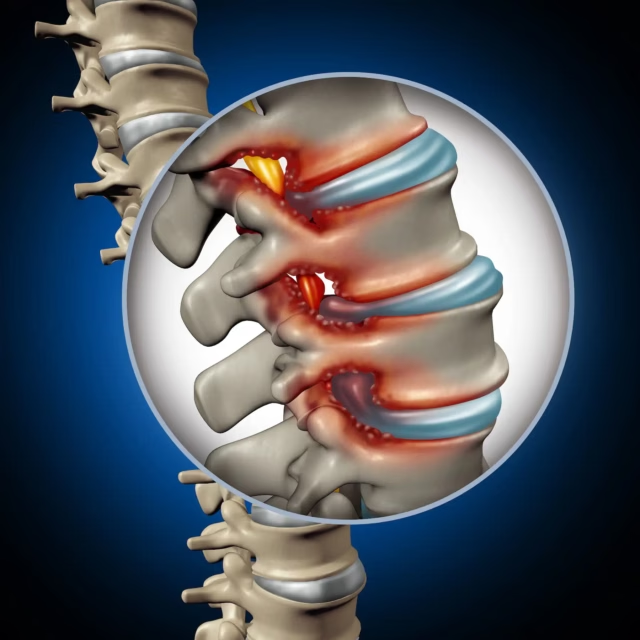
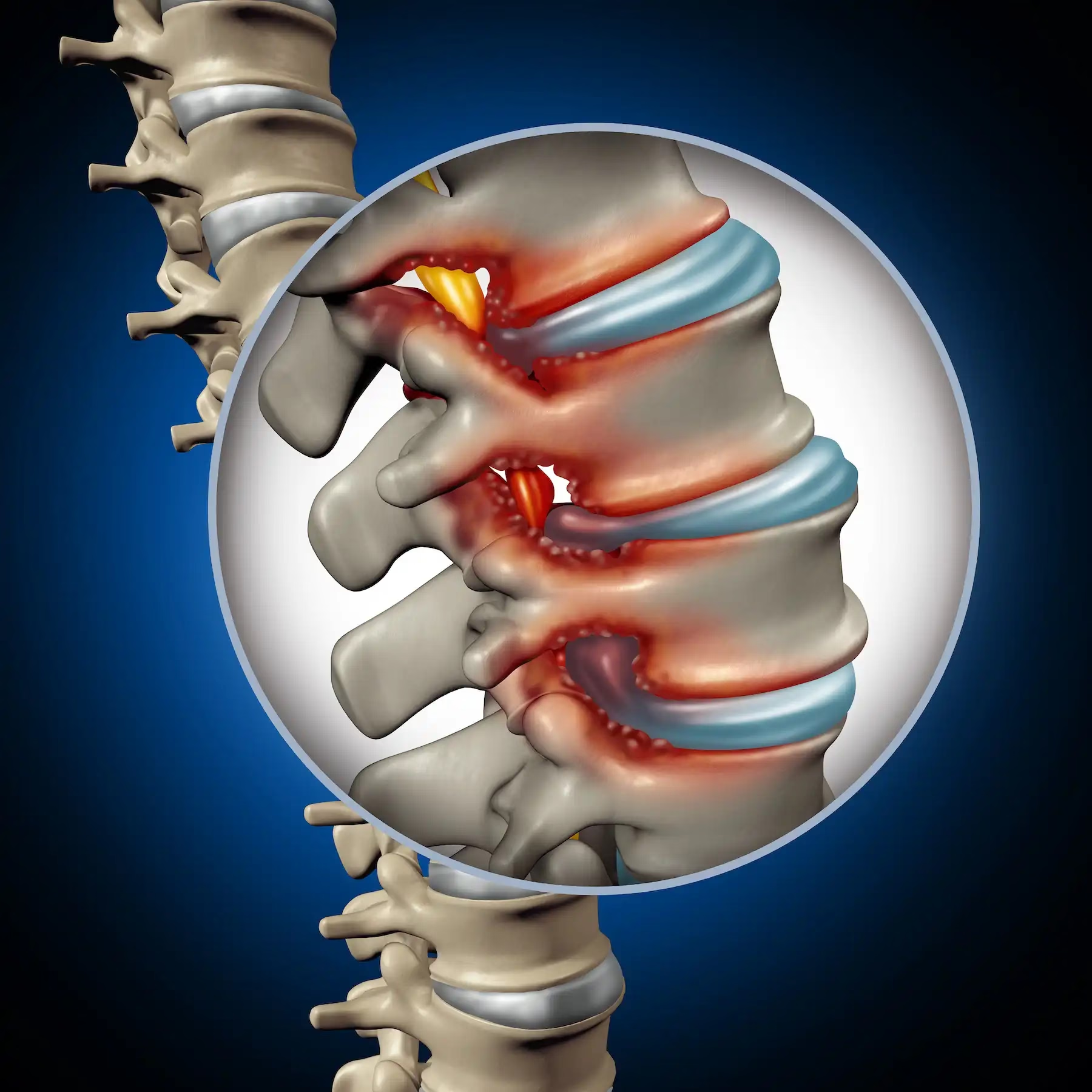
Spinal stenosis means the space around the spinal cord or nerve roots has narrowed. The narrowing may occur in the central spinal canal or in the openings where nerves leave the spine. Some people have narrowing on an MRI with few symptoms. Others develop pain, tingling, weakness or loss of function. A useful diagnosis connects your symptoms and physical exam with the imaging—not the imaging report alone.

Spinal stenosis most often affects the lower back or neck. The location matters because lumbar and cervical stenosis can cause different symptoms and may require different treatments.

Lumbar Spinal Stenosis

Lumbar stenosis affects the lower back and the nerves that travel into the buttocks and legs. It may cause burning or aching leg pain, numbness, cramping, weakness or reduced walking distance. Symptoms are often worse when standing or walking and better when sitting or leaning forward. This pattern is called neurogenic claudication.

Cervical Spinal Stenosis

Cervical stenosis affects the neck. It may cause neck or arm pain, hand numbness, loss of fine motor control, balance problems or changes in the way you walk. When the spinal cord is compressed—a condition called cervical myelopathy—symptoms can progress and deserve timely evaluation.

Common Symptoms

Spinal Stenosis Symptoms often develop gradually and depend on where the narrowing occurs. Common signs include:

  • Lower-back or neck pain
  • Burning or aching pain that travels into a leg or arm
  • Numbness or tingling in the buttocks, legs, feet, arms or hands
  • Weakness in a leg, foot, arm or hand
  • Leg cramping, heaviness or limited walking distance
  • Pain that worsens with standing or walking and eases with sitting or leaning forward
  • Balance problems, an unsteady gait or loss of hand coordination

Causes & Risk Factors

Spinal stenosis is often related to age-related changes, but several conditions can reduce the space available for nerves:

  • Osteoarthritis and bone spurs
  • Thickened spinal ligaments
  • Bulging or herniated discs
  • Spondylolisthesis or other spinal instability
  • A naturally narrow spinal canal
  • Prior injury, fracture or spine surgery

Diagnosis

At Synergy Health Partners, our spine specialists use a comprehensive approach to diagnose spinal stenosis accurately:

Your evaluation should begin with a review of where the symptoms occur, what makes them better or worse, how far you can walk and whether you have weakness, balance changes or loss of coordination. A physical exam may check strength, sensation, reflexes, gait and movement.

X-rays can show bone changes and alignment. MRI can show discs, ligaments, the spinal canal and nerve compression. CT or CT myelography may be used when MRI is not possible or when more bony detail is needed. Other nerve tests may be appropriate when the diagnosis is unclear.

BEFORE YOUR VISIT:
Bring prior imaging and reports if you have them. If you do not have a recent MRI, a spine specialist can determine whether new imaging is needed.

When to See a Doctor

You should schedule an appointment with one of our spine specialists if you experience:

  • Persistent back or leg pain that interferes with daily activities
  • Numbness or weakness in your legs or feet
  • Difficulty walking or balance problems
  • Pain that improves when sitting but worsens when standing or walking

SEEK EMERGENCY CARE NOW:
Go to the nearest emergency department or call 911 for new loss of bowel or bladder control, numbness in the groin or saddle area, severe or rapidly worsening weakness, or sudden difficulty walking or getting out of a chair.

Can Spinal Stenosis Be Treated Without Surgery?

Yes. Many people begin with non-surgical care when there is no emergency or rapidly progressing neurologic problem. These treatments may reduce pain, improve strength and help you stay active, even though they do not physically widen the spinal canal.

  • Physical Therapy
    • A physical therapist may use individualized exercises to improve strength, endurance, flexibility, balance and body mechanics. The goal is to help you move more safely and do more with fewer symptoms.
  • Medication and Activity Changes
    • Your clinician may discuss short-term changes in activity and medicines for pain or nerve symptoms. Medication choice depends on your health history and should be reviewed with a qualified clinician.
  • Spine Injections
    • An epidural or other targeted injection may reduce inflammation and provide temporary relief for some types of nerve pain. Results vary, and injections do not correct weakness or permanently reverse the narrowing.

When Is Surgery for Spinal Stenosis Considered?

Spinal stenosis treatment does not automatically require surgery. A spine surgeon may discuss surgery when your symptoms and exam match nerve compression on imaging and one or more of the following is true:

  • Pain, weakness or walking limits are significantly reducing your quality of life
  • Weakness, numbness, balance problems or loss of coordination are progressing
  • Appropriate non-surgical treatment has not provided enough relief
  • Spinal instability or deformity also needs to be addressed
  • Urgent nerve or spinal cord symptoms require faster treatment

Surgery for lumbar canal stenosis is usually considered to relieve pressure on the affected nerve roots and improve function—not simply because an MRI shows narrowing. The decision should account for your goals, overall health, bone quality, symptom pattern and expected benefit.

  • Is There an Age Limit for Spinal Stenosis Surgery?
    • There is no one-size-fits-all age rule. Age is considered together with frailty, heart and lung health, diabetes, smoking, bone quality, medications, support at home and the demands of the proposed operation. A focused risk assessment is more useful than an age cutoff.

Spinal Stenosis Surgery Options

The purpose of spinal stenosis surgery is to create more room for compressed nerves or the spinal cord. The right procedure depends on the location of the stenosis, the number of levels involved, spinal alignment and whether the spine is stable.

  • Lumbar Decompression Surgery
    • Lumbar decompression may include laminectomy, laminotomy or foraminotomy. The surgeon removes the amount of bone, thickened ligament or other tissue needed to relieve pressure while preserving stability when possible.
  • Cervical Spinal Stenosis Surgery
    • Surgery in the neck may decompress the spinal cord or nerve roots from the front or back of the neck. Depending on the anatomy, alignment and stability, decompression may be performed alone or with fusion. Your surgeon should explain why a specific approach fits your condition.
  • Minimally Invasive Spinal Stenosis Surgery
    • Some decompression or fusion procedures can be performed through smaller incisions with specialized instruments. A minimally invasive approach may reduce disruption to surrounding tissue for selected patients, but it is not automatically the safest or best option for every pattern of stenosis.

Important:
Fusion is not required for every case of spinal stenosis. It may be added when instability, deformity or the planned decompression makes stabilization necessary.

What Is the Success Rate of Surgery for Spinal Stenosis?

There is no single honest success percentage for every patient or procedure. Outcomes are generally more predictable for nerve-related leg or arm symptoms than for back or neck pain alone. The likelihood of improvement depends on which nerves are compressed, how long symptoms have been present, whether permanent nerve damage has occurred, the procedure performed and your overall health.

Before surgery, ask what outcome is realistic for you: less leg or arm pain, improved walking, preserved strength, better balance, or prevention of further neurologic decline. Your surgeon should also explain which symptoms may not improve.


Risks of Spinal Stenosis Surgery:

All surgery has risk. Possible complications include bleeding, infection, blood clots, a reaction to anesthesia, nerve injury, a spinal fluid leak, continued or new symptoms, recurrent narrowing and the need for additional treatment. Fusion has additional risks, including failure of the bones to heal together or problems involving the implants.

Your individual risk depends on your health and the planned procedure. Ask the surgeon to compare the likely benefit, the alternatives and what may happen if you do not have surgery.

Spinal Stenosis Surgery Recovery

Recovery varies. Decompression alone usually has a shorter recovery than decompression with fusion. Cervical and lumbar procedures, open and minimally invasive approaches, your health and the physical demands of your job also affect the timeline.

  • Immediately after surgery: The care team monitors you, manages pain and helps you begin moving when it is safe.
  • The first few weeks: Incision discomfort should gradually improve. Walking and activity usually increase in stages, with restrictions based on the procedure.
  • Work and driving: Timing is individualized. Do not drive until your surgeon says it is safe and you are no longer impaired by pain medicine or limited movement.
  • Longer-term recovery: Strength, endurance and irritated nerves may continue to improve over time. Fusion generally requires a longer healing period than decompression alone.

Why Synergy Health Partners for Spinal Stenosis Care?

Our comprehensive spine care team provides coordinated treatment from diagnosis through recovery, all under one roof. Our goal is to identify the right next step, not assume that every patient needs surgery.
  • One connected spine team: evaluation, imaging, physical therapy, pain management and surgical care can be coordinated around one plan.
  • Treatment matched to your goals: your plan should reflect the symptoms and activities that matter most to you.
  • Clear surgical decision-making: understand why a procedure is, or is not, recommended and what it is expected to change.
  • Access across Southeast Michigan: find a spine specialist and location that works for you.

Treatment Options

Star icon

Our spine specialists offer a full spectrum of treatment options for spinal stenosis, from conservative therapies like physical therapy and epidural injections to minimally invasive surgical procedures, all tailored to your specific condition and goals.

COMPREHENSIVE SPINE CARE IN SOUTHEAST MICHIGAN

Why Choose Synergy?

Our coordinated care model means faster diagnosis, streamlined treatment, and better outcomes for spinal stenosis patients.
0 %

Patient satisfaction with stenosis treatment

(1 Year)

0 %

Improvement in walking distance

(6 Months)

0 %

Return to daily activities

(3 Months)

Data Source: CODE Technology PRO Surveys (2025).